
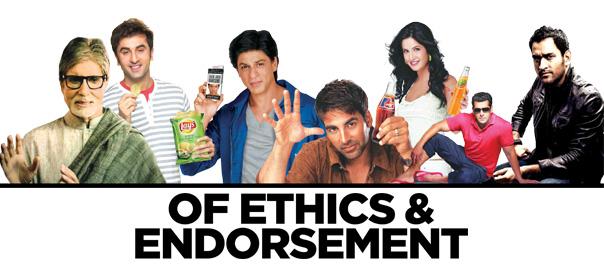
Following the controversy created by Amitabh Bacchan’s ‘poison’ comment on Pepsi - a brand endorsed by him for eight years – SIMRAN SABHERWAL and SALONI DUTTA ask whether brand ambassadors should be held responsible for the quality and reputation of products they endorse
One comment from actor Amitabh Bachhan equating the soft drink Pepsi to poison at a public forum earlier this month perhaps undid whatever value he may have added to the product as its brand ambassador for eight years. Even as the industry saw strong reactions and questions about ethics, and the company moved into damage control mode, the Central Consumer Protection Council (CCPC) met in New Delhi to debate another aspect of brand endorsement - whether celebrities should be penalized for misleading people about products in advertisements.
According to the CCPC, which decided to set up a sub-committee to suggest strategies to deal with misleading advertisements, aggrieved consumers may soon be able to claim compensation not only from advertisers, but from celebrities endorsing a product which does not live up to claims made about it in advertisements.
The heat is clearly on celebrity endorsers, who have immense power to sway public opinion. How ethical are they when they pick products to promote? Is it just a commercial arrangement or do they make moral and ethical choices? Would they embrace the same product in their personal lives with as much pride as they show on screen/in Print? And what about the celebrity’s ethical commitment to the brand once the legal contract is over? Is there need for government regulation in this matter, considering India’s illiterate millions who are easily swayed by a star?
‘Brand ambassadors must take some responsibility’
SOLD ON STAR POWER
A celebrity is the answer whenever a brand manager needs a quick bump-up in sales or wants to ensure high recall value. Over the last decade, celebrities have endorsed every possible brand in every possible product category, begging you to ask the question: Is there any product or sector which has not seen celebrity association? With the public’s insatiable obsession with celebrities, particularly actors and cricketers, it is easy to understand why having a popular face on your side can work. For one, having a star helps in getting the required attention while sending out the message quickly; it also helps break the clutter in an era when most products have very little differentiation. In fact, Japan and India are two countries which have a high tendency to use celebrities. The emergence of social media wherein a celebrity has a direct connect with his or her fans is another bargaining chip in the celeb’s arsenal. For example, Salman Khan with over six million followers on Twitter and 13 million Facebook fans can today monetize and leverage his following with a brand. Some experts believe that celebrities needed brands 20 years ago to gain popularity, but today, that’s not the case as they have their own loyal fan following.
BUILDING BRAND CONNECT
How much thought does a celebrity give while picking a product to endorse? For decades, Lux has been synonymous with glamour; the beauty soap used film stars globally to sell this proposition. In the eighties, celebrities like Kapil Dev enthralled audiences with the secret of their energy (Boost), while actor Vinod Khanna promoted Cinthol as his body confidence soap. It was left to the likes of ‘Lalithaji’, the woman next door, to explain why it was a sensible decision to buy Surf. Today, we have Salman Khan explaining the attributes of Wheel detergent to his wife (and romancing her at the same time) while Shah Rukh revels in his beauty secrets in a bathtub for Lux. Not just women, men too endorse beauty products. Says Atul Kasbekar, CMD, Bling! Entertainment Solutions, “Celebrities should believe in the product and hopefully use the products that they endorse. But, there are enough people out there who will endorse anything and everything if they are paid a sum that they think is acceptable with scant regard for doing a background check.” However, most endorsement agreements are clear on the celebrity’s public consumption of the endorsed brand in the product category in question. While celebrity management firms have their laundry checklist to ensure a brand fit, the advertising tact, service provided and financial consideration are the main criteria for finalizing a deal. Sagar Boke, Marketing head, Dalda Edible Oils, Bunge India states, “What’s most important is the ‘power of persuasion’ that the brand ambassador brings. This helps brands make inroads at different stages of their life cycle.” Kasbekar adds that his firm exercises extreme caution when it comes to making a match with realty firms and fairness creams, and believes that celebrities should put a limit on the number of brands they endorse, “Celebrities shouldn’t do more than six to eight endorsements. It adds to your credibility when you are speaking for a few things and you are speaking well, then people will take you and the product seriously.”
THE THIN LINE
Bachchan’s comments on Pepsi came only after his association with the brand had ended. So how do celebrities connect with a brand once their contact ends? Anirban Das Blah, Chief Executive and Managing Director of celebrity management firm CAA KWAN says, “Anytime a celebrity endorses a brand, the brand should be very clear and put it in the contract that even after you stop endorsing, you cannot say anything that is disparaging to the product that you have endorsed. Very few brands do it and I think they must do it.” Raj Nayak, CEO, Colors too has the same opinion: “A brand ambassador is endorsing a product not out of charity, but for commercial reasons. So there is a lakshman rekha where they shouldn’t speak anything negative about it, having taken the money for it. Once you endorse a product, it is not right to say anything that can have a negative impact on the brand.” The aspect of denigration - specially after the commercial contract is over- needs to be looked into as brands invest crores in building an association with the celebrity during the endorsement years. According to Anisha Motwani, Chief Marketing Officer, Max Life Insurance, “These associations are usually governed by the economics of marketing budgets and celebrity imagery in addition to the critical aspect of relevance. Celebrities ought to be cognizant of their exponentially negative impact in eroding the brand value created over the years by even a minor act of denigration, as we saw in the recent case of a popular beverage brand.” So how can things pan out in the future? Chandramohan Mehra, Country Head – Emerging Business (Digital Business, Cross Sell and International Operations), SBI Life Insurance says, “When a celebrity and a brand form a partnership, they will try to tighten the legal and the contractual framework. The applicability of some of the clauses could go beyond the endorsement contract tenure.”
Blah draws a distinction, saying that there are two kinds of endorsements – one where the celebrity endorses a product by saying ‘I believe in this brand’ and the second where he is just a spokesperson. He cites the example of Shah Rukh Khan and Navratna Oil, where he says it is not implied how the star leads his life.
TAKING RESPONSIBILITY
In the recent past, some companies, particularly in the financial sector, have come under the scanner for alleged scams. In one instance, it was the collapse of the Saradha Group - a chit fund based in West Bengal and patronized by politicians and celebrities. Elsewhere, the Supreme Court questioned Sahara, a company which until recently had the patronage of the Indian cricket establishment and the entire Indian cricket team - for violation of RBI norms. In both cases, gullible consumers - investors in small towns - may have been influenced by celebrities. In this case, can a celebrity be held accountable for the doings of the firm? Most experts believe that while brand ambassadors cannot be expected to be an expert on the product in question, they should be reasonably conversant with the brand and be guided by their own integrity and ethics on the product categories and brands that they choose to endorse. Celebrity endorsements usually impact the decision-making process of the average consumer and celebrities ought to be mindful of this fact. Contractually, the company undertakes a clause that it is not misrepresenting facts in what has been told to the celebrity and also in the communication.
Ankit Patidar, VP, Marketing, Shakti Pumps, says that while their TVC talks about empowering consumers, it uses the star power of Bachchan to connect with its core target group, the farmers. “Celebrities should be cautious about what they are endorsing because it is not so much the product but the goodwill of the particular brand ambassador that the consumers are buying. If I speak from a consumer’s perspective, yes I think they should be held responsible for quality of the products they endorse,” he adds.
What is also at stake here is the celebrity’s own brand value. Ishan Raina, Managing Director & CEO, Out-Of-Home Media says, “Consumers are not fools; if a brand’s ambassador seems to be lying about the product, this is the brand ambassador or celebrity’s value. Brand ambassadors should be held ethically and morally responsible, they should not be financially responsible.” A recent radio spot by the Government of India cautionsconsumers against believing celebrities endorsing financial instruments. Pradeep Guha, Managing Director, 9X Media, finds this idea far-fetched and says, “Celebrities will stop endorsing new products and only endorse well known established brands. This means the government in a way is discouraging new companies and new brands, which is totally against all norms of fair competition. Their responsibility begins and ends there, whether you give your face to an ethically good product or an ethically bad product.”
However, the general consensus is that celebrities need to be cautious when they make specific claims about the product. According to Pranesh Misra, Chairman & Managing Director, Brandscapes Worldwide, “If the endorsers are expected to make specific claims on the functions of the product, it is their responsibility to know that the claims are genuine, that there is enough evidence behind the claim and based on consumer research.”
THE LEGAL ASPECT
While due diligence is the standard norm to protect the star’s own brand worth, most industry observers feel that celebrities cannot be held accountable for the quality of product they endorse. If this were to be the norm, then even models could be brought under the same scrutiny. Shireesh Joshi, COO, Strategic Marketing Group at Godrej, which roped in Aamir Khan as their brand ambassador, says, “I would separate moral and legal, the legal responsibility should only rest with the manufacturer because it is the manufacturer who puts up the money to produce and advertise it. It is also the manufacturer, who has crafted that claim.”
Feedback: simran.sabherwal@exchange4media.com