


Every big technology change shifts how consumers behave, often before companies realise they need to catch up. When smartphones became popular, people mostly talked about the devices themselves. It took businesses much longer to see the real change: people were living differently, not just using the Internet in new ways. How they got around, picked restaurants, and shopped— all changed. Industries such as transportation, retail and entertainment had to rethink how and when they connected with people.
Now, we are at the start of a similar shift with AI. Once again, many people are missing the real issue.
The conversation we're not having
Most of the chatter about AI in business focuses on making things run more smoothly—automation of tasks, expedited decision-making, and lower costs. These are real benefits, but they are not the biggest change AI is bringing. People are paying much less attention to how AI is changing the way we find information, compare choices, and make decisions. This is the change that should really concern marketers. For almost twenty years, people have discovered things in the same way. They have a need, type a question, look at the results, and then decide what to do. Digital marketing—search rankings, content strategies and SEO—was designed to succeed in this system.
AI assistants are changing these rules.
From options to answers
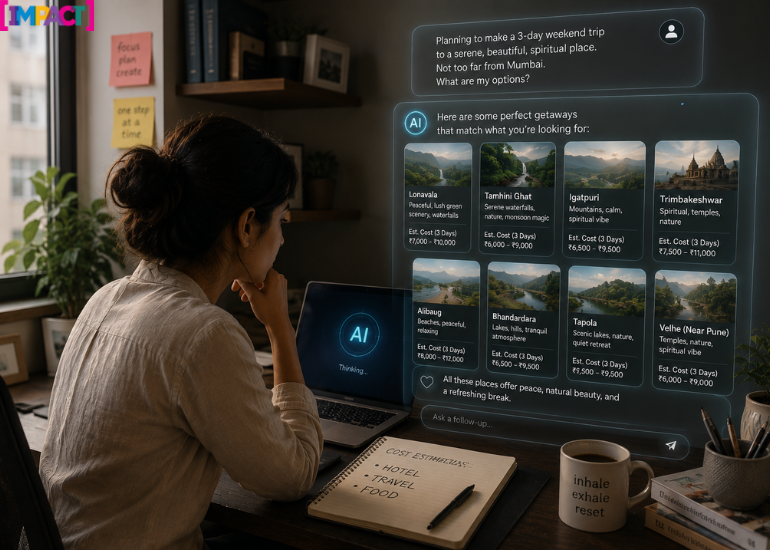
More and more, people use AI not just to get information, but to make sense of it. They ask detailed questions and want recommendations. They expect AI to think for them and give a clear answer, not just a list of options.
This difference is key.
A search engine gives you choices. An AI system gives you its opinion. When someone asks which electric car fits their life, which trip matches their budget, or which software works for their team, they no longer want to spend twenty minutes comparing links. They expect AI to do the hard work for them. This change affects how brands get noticed. In the past, the goal was to be one of the choices. Now, the goal is to be part of the answer itself.
Visibility in AI environments doesn't follow the old rules
Over the past year, our team at OptimizeGEO.AI studied how AI platforms show and mention brands. One thing is clear: being visible in AI is not the same as being visible in regular digital channels.
Brands that perform well in search results do not always appear in AI recommendations. Even with the same question, different AI systems can give different answers. They use different sources, value different signals, and combine information in their own ways.
This means marketers may be entering a time when standard metrics like rankings, impressions, and traffic no longer clearly indicate whether a brand is reaching people. The real question is not if your brand is on the first page. It is whether your brand is included in the answer when people stop searching and start asking.
What AI actually rewards
This moment is both challenging and eye-opening for brand-builders. AI does not just reward optimisation. It values things like authority, credibility and consistency.
Brands that show up most often in AI answers have a few things in common. Trusted third parties talk about them. They are mentioned in reliable, respected sources. Their expertise is clear, and their message is consistent across different channels, across time. In short, AI is making the basics of brand-building even more important, not replacing them.
The new part is who is doing the judging. These qualities have always shaped how people see a brand. Now, they are also shaping how machines present a brand. A brand with a clear message, strong information, and real third-party trust does not just win with people. It also wins over the AI systems that people are increasingly trusting.
What this means for marketers
Search is still important. Websites, content platforms and social media are still needed. What is changing is how people interact with all of these things. Social media changed how people found products, and mobile phones changed when and where they made decisions. Now, AI is starting to change how those decisions are made in the first place.
Every new technology changes the landscape. The companies that succeed early are not usually the ones chasing trends. They are the ones who notice changes in behaviour early and adjust their approach.
The brands that will do best in an AI-driven world are already investing in what has always mattered: real expertise, clear and consistent messaging, trust from reliable sources and a strong point of view.
The difference now is how urgent this is. These qualities have always mattered to people. Now, they matter to machines too, and that audience is growing faster than almost anything else in digital marketing.
Marketers should not just be asking technical questions. The real question is about strategy:
‘When consumers stop searching and start asking, will your brand be part of the answer?’