
A consumer in Mumbai might discover a sneaker through a short-form video during her morning commute, check reviews on a marketplace over lunch, see a creator styling the same product in the evening, and finally place an order during a late-night quick commerce sale. Two days later, she may encounter a competing brand offering a limited drop and reconsider her choice. A similar pattern increasingly plays out in higher-involvement categories such as automobiles, where a prospective buyer may first see a new SUV through an influencer reel, explore detailed walk-through videos on YouTube, compare specifications across automotive portals, and book a test drive through a brand app before ever stepping into a dealership. This is not indecision; it is the new normal. Consumers today do not move in straight lines. They move in loops.
India’s scale makes this behaviour even more visible. As of early 2025, the country has over 806 million Internet users, with nearly 491 million active social media identities, reflecting an ecosystem where discovery and influence are constant rather than episodic. Indians now consume massive volumes of mobile data, averaging over 36 GB per user per month, driven largely by video, social and streaming engagement. This intensity of usage has fundamentally altered how people encounter brands. Discovery no longer happens at a single touchpoint; it unfolds across multiple screens, formats and communities, often within hours.
The advertising ecosystem mirrors this behavioural shift. Digital media accounted for nearly 46 per cent of India’s total advertising expenditure in FY2025, surpassing `1.1 lakh crore and continuing to grow at a healthy pace. At the same time, India’s overall ad market is projected to grow by close to 10 per cent in 2026, with digital driving much of that expansion. But the significance of these numbers lies not in scale alone; it lies in how digital channels compress the distance between exposure and action. A product can be discovered, validated, compared and purchased within minutes, yet it can just as easily be reconsidered the next day when a new recommendation appears.
E-commerce and retail media growth reinforce this pattern of continuous evaluation. Online marketplaces in India have reported strong double-digit growth in advertising revenues, reflecting how brands now compete directly at the moment of consideration rather than after awareness is built. Consumers experiment more freely because alternatives are visible and switching costs are low. Exposure to global brands, regional challengers and digitally native startups happens simultaneously, often within the same browsing session. Loyalty depends less on habit and more on whether a brand continues to deliver relevance in real time.
This non-linear behaviour is amplified by India’s diversity. With most internet users consuming content in regional languages, brands must resonate across cultural and economic segments. A message that works in one region or platform may not translate to another. Consumers move across vernacular content, OTT platforms, social feeds and commerce ecosystems, expecting consistency with contextual relevance. Uniform messaging struggles; adaptive storytelling thrives.
Technology and AI accelerate these dynamics. Recommendation engines personalise discovery, predictive analytics anticipate intent, and automation enables messaging at scale. Beyond efficiency, they raise expectations—personalised feeds, instant recommendations and seamless checkouts set ecosystem-wide benchmarks.
For brands, this reshapes growth. Visibility alone fades without contextual resonance. Performance marketing may drive spikes, but sustained advantage needs continuity across platforms. Organisations must move beyond campaigns to systems that read behavioural signals, adapt messaging and align media dynamically. The challenge is no longer capturing attention once, but staying relevant across repeated evaluation cycles.
Constant consumer behaviour does not erode the power of a brand; it intensifies its importance. In a marketplace defined by abundant choice and relentless comparison, clarity of purpose and coherence of experience provide stability. Yet coherence today demands flexibility.
Brands must hold a consistent core while expressing it differently across languages, platforms and cultural contexts. As India’s digital economy expands and consumer expectations continue to evolve, adaptability becomes a structural requirement rather than a tactical advantage. Growth will belong to organisations that understand that consumers never truly exit the decision cycle; they simply continue moving within it.
In this environment, relevance is not something that can be built once and sustained indefinitely. It must be earned continuously. For that reason, the importance of managing a brand in a consistent and integrated manner has become greater than ever. Fragmented communication across agencies or channels can no longer sustain long-term relevance in a marketplace where consumers constantly reassess their choices.
Historically, agencies competed to deliver the most compelling creative idea. Creativity remains essential, but the basis of competition is shifting. The defining capability of the next generation of agencies will be how deeply they understand and interpret consumer behaviour. The question will no longer be who can produce the most striking campaign, but who can most accurately decode how consumers move, evaluate and decide across an evolving ecosystem.
To meet this challenge, agencies must observe emerging behavioural patterns, detect shifts in consumer expectations, and translate those signals into meaningful brand relevance. Discovering and sustaining relevance in real time will become the central discipline of modern marketing.
In that sense, the mission of future marketing agencies will extend beyond campaign execution. Their role will be to interpret the dynamics of consumer behaviour, connect brands to cultural and technological change, and ensure relevance is continuously renewed.
E - PAPER

CURRENT ISSUE

LAST ISSUE
‘Consumers Today Do Not Move In Straight Lines. They Move In Loops’
Jaeho Yoo, CEO, INNOCEAN India, on evolving consumer behaviour redefining brand growth and marketing strategy in India’s dynamic digital ecosystem
 BY
Jaeho Yoo
BY
Jaeho Yoo
Published: Mar 30, 2026 11:40 AM

RELATED STORY VIEW MORE

Locks of Trust

Innocean India lays off 15 employees, including senior leaders

Kajaria Ceramics calls for a pitch, awards creative duties to Innocean India

INNOCEAN India and Canvas Worldwide India Win Integrated Mandate for UPES

The 360° Cover Drive

From Mad Men To Machine Minds
TOP STORY

Best Ads of September 2026
The standout campaigns that caught attention, sparked conversations and made September 2026 memorable


NEWS LETTER
Subscribe for our news letter
E - PAPER
-
CURRENT -
LAST WEEK
Subscribe To Impact Online
IMPACT SPECIAL ISSUES

NDTV’s Big Test
Suniel shetty takes the Spotlight
Miked Up for Goafest
Get Set Goaaa!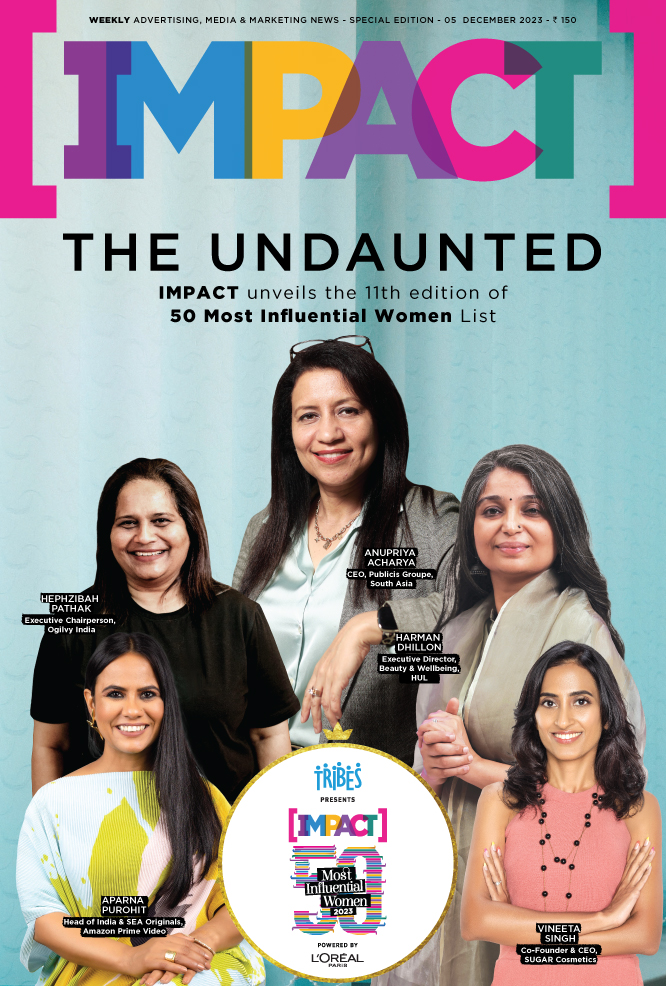
Anupriya Acharya Tops the IMPACT 50 Most Influenti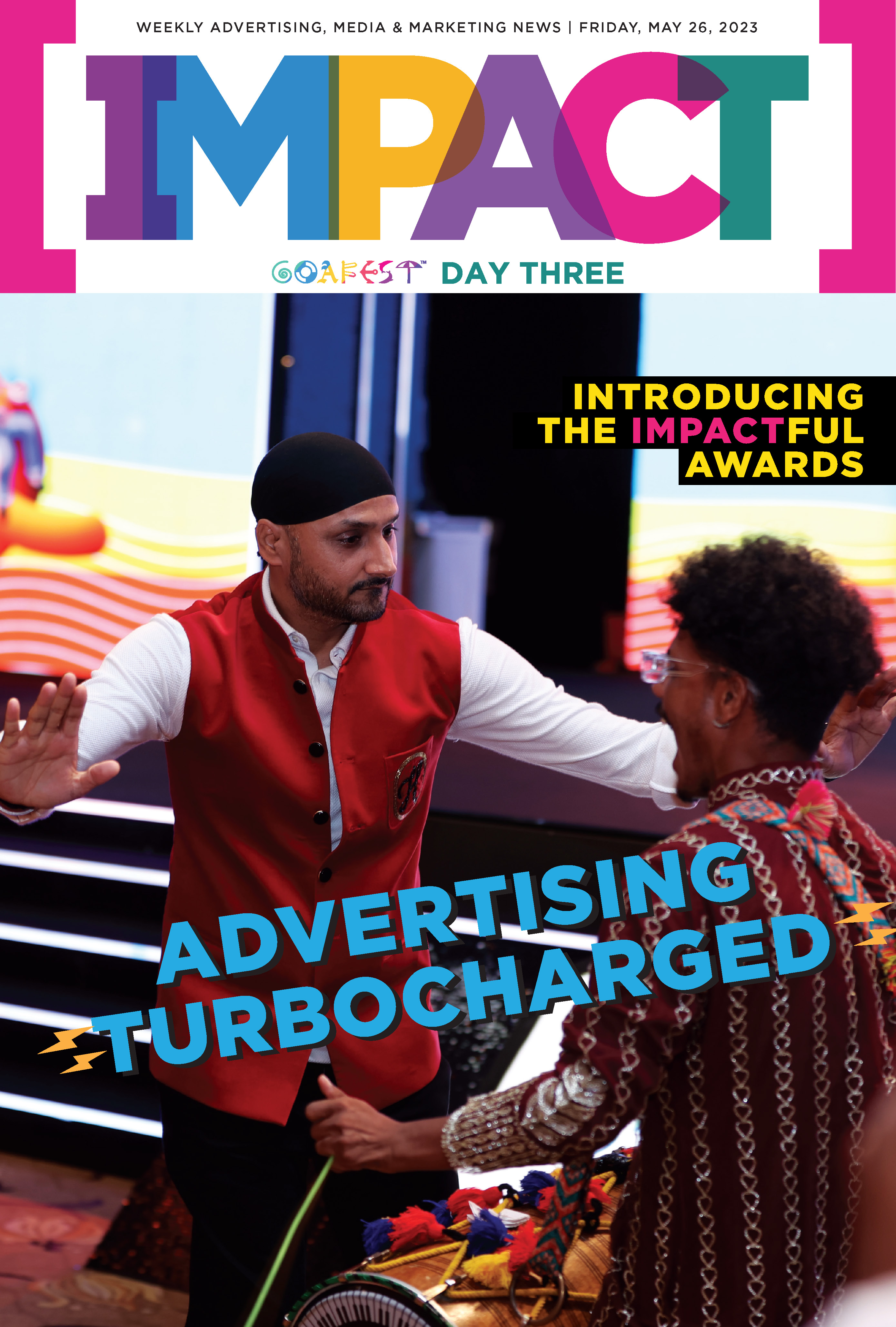
Advertising Turbocharged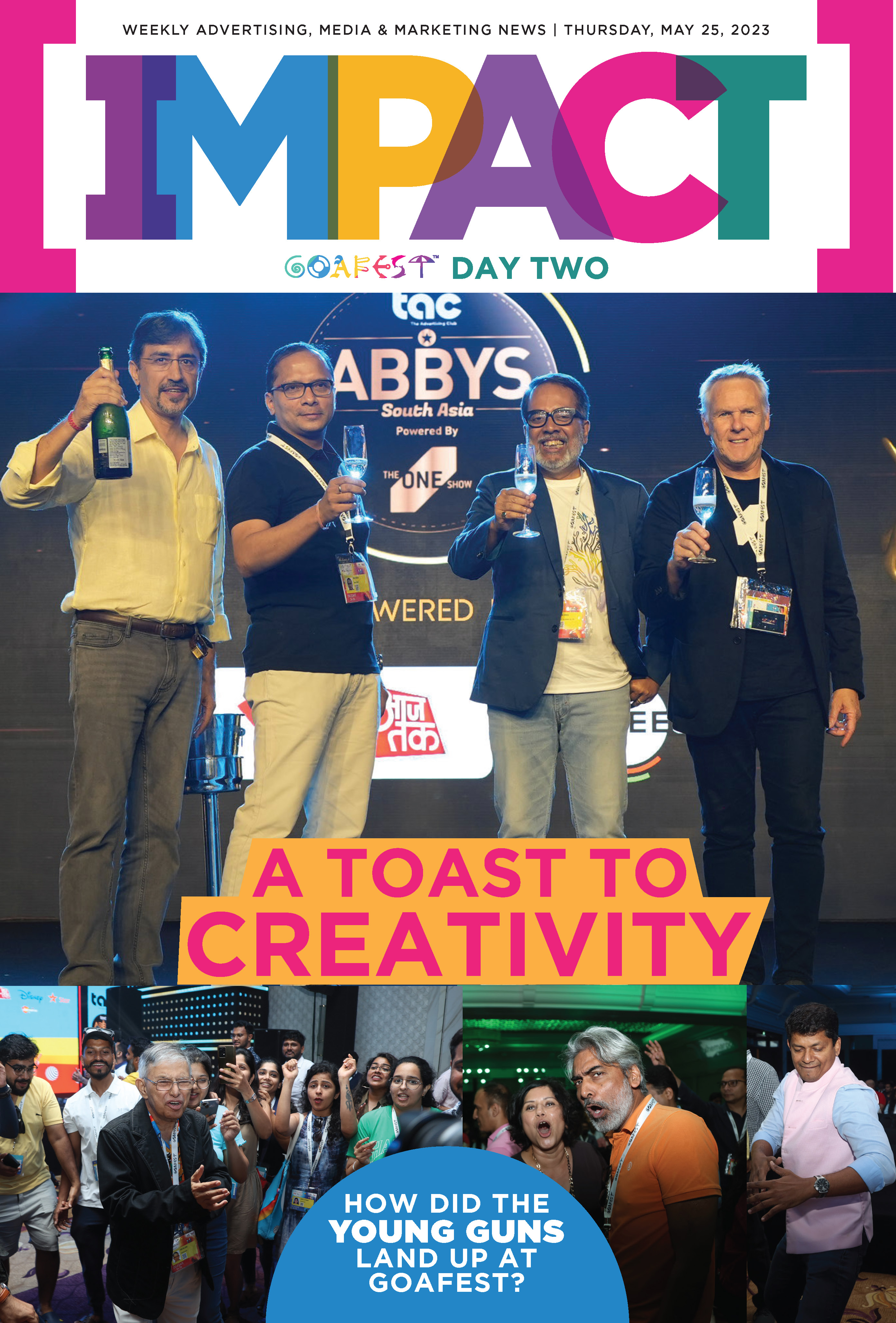
A Toast to creativity
GOAing towards tech-lead creativity
REDISCOVERING ONESELF
50 MOST INFLUENTIAL WOMEN LIST 2022
BACK WITH A BANG!
Your Best Coffee Ever
PR Commune Magazine June-July 2022
13th-ANNIVERSARY-SPECIAL
PR Commune Magazine April 2022
VIDEO GALLERY VIEW MORE
