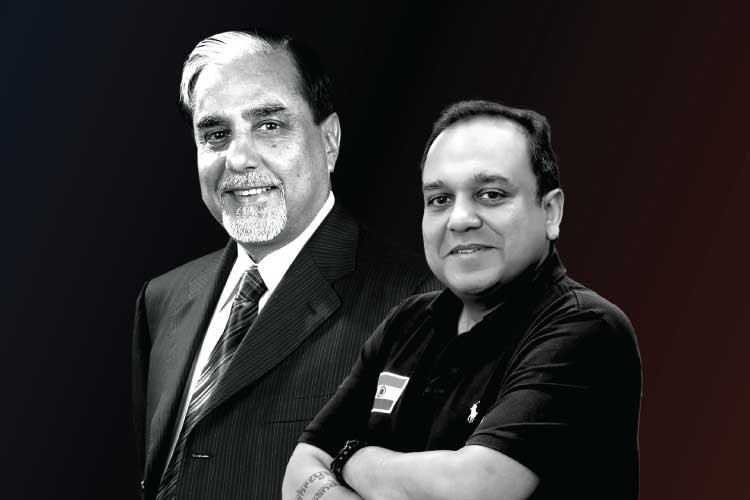

Amid the ongoing scrutiny over his personal insolvency proceedings, Essel Group founder Subhash Chandra has sought to clarify the ₹22,000-crore claims against him, saying the figure represents claims made in his capacity as a personal guarantor and not money he personally borrowed. He also maintained that the borrowing entities for which he had provided guarantees have repaid around ₹43,000 crore of their approximately ₹45,000-crore liabilities since 2019.
The National Company Law Tribunal (NCLT) has approved a repayment plan under which Chandra is to contribute around ₹6.5 crore against admitted creditor claims of approximately ₹22,006.57 crore. The plan received 80.814% approval from creditors, although several lenders have opposed it and may challenge the decision.
Addressing the controversy in a video statement, Chandra said the claims being reported do not reflect what he believes is the current position of the matter.
“Total claim against Subhash Chandra as a personal guarantor, in the personal insolvency proceedings, is only ₹3,992 crore by the objectors of the plan and not ₹22,000 crore,” he said. He added that ₹620 crore had already been settled, while borrowing entities had offered a further ₹1,063 crore.
Chandra also reiterated that he had not personally borrowed money from lenders involved in the proceedings. “There is no personal borrowing by Dr. Subhash Chandra from any of the creditors... He only signed personal guarantees,” his statement said. The wider financial crisis, he said, began with an asset-liability mismatch in January 2019. Chandra recalled that he had then publicly acknowledged mistakes and committed to repaying the group’s obligations.
“I said, ‘I will repay every rupee that I owe to the system, and all the borrowing entities in my group will repay their dues as well.’ And we did that,” he said. According to Chandra, the group sold family and personal assets, companies and even mortgaged its home to meet its obligations. “We did not keep much for ourselves. We even mortgaged our home. But we repaid everyone's money,” he said.
He argued that the ₹22,000-crore figure being discussed needs to be viewed in the context of the much larger debt that has already been repaid by the underlying borrowing entities. “When the total liability of our group was ₹45,000 crore, of which ₹43,000 crore had already been paid and ₹2,000 crore remained, where did the additional ₹3,900 crore come from?” he asked.
Chandra also disputed claims about his personal wealth, saying that figures relating to the market capitalisation of group companies had been presented as his personal net worth. “When I became a Rajya Sabha member in 2016, I had to file a declaration. In that declaration, my net worth was around ₹39 crore and some lakhs. If I was declaring a net worth of around ₹39 crore in 2016, how could it become ₹45,000 crore in 2017?” he said.
Against the backdrop of the NCLT proceedings, Chandra said he was willing to put whatever he had left towards his obligations. He said he currently has around ₹6.5 crore and that even this amount would have to be paid under the repayment plan.
“I am not speaking like someone who has lost everything,” he said. “I have only around ₹6.5 crore left, and even that will now have to be paid according to the plan.”
Chandra said he has a small residential property, part of which is rented out, and that he currently uses the rental income to meet his expenses.
Yet, he said, he does not view the situation as an end to his entrepreneurial journey. “I have no regrets, friends. I will earn again. I am a pioneer. I know how to do good work and start new businesses, and I will continue to do so,” he said. Chandra said he is already looking at opportunities to rebuild, including working with friends in Switzerland involved in investments. He also indicated that he could borrow money from family and invest it in startups. “I may also borrow a few crores from my family and invest that money in one or another startup that can grow,” he said.
For Chandra, the objective is not simply financial recovery but rebuilding the legacy he believes he created over more than five decades in business.
He recalled starting his career with ₹17 and eventually becoming one of the country's top 10 richest individuals. He also claimed that, over his working life, he had paid around ₹70,000 crore in interest to the financial system.
“I have no regrets about that. And today, even though everything is gone, I have no sorrow about it,” he said.
Chandra concluded by calling for people to verify claims circulating about him on WhatsApp and social media and offered to answer questions directly. “I give you the right to question me. Everything about me is open. Email me, send me your questions directly, and I will answer you,” he said.
An additional clarification was shared by Chandra's office that stated, “This clarification addresses certain allegations and misleading reports claiming that the companies which voted in favour of the repayment plan are associate entities. We would like to state that this claim is not true and inaccurately represents the facts. Some of the associate entities referenced in the reports, belonged to Shri Jawahar Goel, whose business interests were separated from Dr. Subhash Chandra in 2008-09 through a family business separation process. The separation process and subsequent division of the business was duly informed to the stock exchanges and the regulator. Further, the term ‘associate entity’ is well-defined in the Insolvency and Bankruptcy Code statutes. In accordance with the provisions of the Code, the companies concerned do not qualify as associate entities of the Group.”