
In a major development for the global advertising industry, Omnicom has formally completed its acquisition of The Interpublic Group of Companies (IPG), following unconditional approval from the European Commission. The deal creates one of the largest consolidations the sector has witnessed.
The combined entity now boasts pro forma revenues exceeding $25 billion, surpassing WPP’s reported $18 billion and officially becoming the world’s largest advertising network by revenue. The company will operate under a unified identity and trade on the New York Stock Exchange with the ticker symbol OMC.
Under the terms of the agreement, Interpublic shareholders received 0.344 Omnicom shares for each IPG share. As a result, legacy Omnicom shareholders own approximately 60.6% of the combined company, while former IPG shareholders hold around 39.4% on a fully diluted basis.
Leadership continuity has been central to the transition. John Wren continues as Chairman & CEO, with Phil Angelastro staying on as EVP & CFO. Philippe Krakowsky and Daryl Simm have been appointed Co-Presidents and COOs, representing a balance of leadership from both organisations. Krakowsky, Patrick Moore, and E. Lee Wyatt Jr. have also joined the Omnicom Board of Directors.
“This is a defining moment for our company and our industry,” says John Wren, Chairman and CEO of Omnicom. “With the completion of the deal, Omnicom is setting a new standard for modern marketing and sales leadership, creating stronger brands, delivering superior business outcomes, and driving sustainable growth. We’re excited about this next chapter. I want to thank our people, clients, and shareholders for the trust they have placed in us,” he explains.
More announcements, including leadership lineups, structural changes, and agency consolidation details, are expected over the coming week.
The merged company positions itself as a next-generation growth platform, combining extensive capabilities across marketing, media, commerce, CRM, analytics, and creative services. At the centre of this integration is Omni, Omnicom’s proprietary intelligence system built to unify data, technology, and creativity within a single scalable infrastructure.
The company says this ecosystem represents a fundamental shift in how talent and technology are organised to address client growth in rapidly evolving markets.
While the global implications of the merger are significant, its impact in India is equally transformative. According to Comvergence, WPP continues to dominate India’s media buying landscape with an estimated $6.6 billion in 2024 billings. IPG Mediabrands trails at around $2 billion, followed by Publicis Media at $1.7 billion.
(The report shows that the total media market studied in India was valued at $16 billion, including twenty agency networks and two independent agencies.)
Post-merger, however, the combined Omnicom–IPG entity now crosses $2.5 billion in billings, securing the No. 2 position in the Indian market and widening the gap over Publicis. The consolidation strengthens Omnicom’s scale in India, expands its client base, and gives the network deeper access to global technology, data, and analytics infrastructure.
The merger also carries major implications for the workforce. At the end of 2024, Omnicom employed 74,900 people, while IPG had 53,300 employees.
Over the past year, IPG has been undergoing one of the most aggressive restructuring programmes in agency history, cutting 3,200 jobs, including 800 layoffs in September alone, and vacating 135,000 sq. ft. of office space. Omnicom has also streamlined its operations, trimming roughly 3,000 roles, according to media reports.
As the two large networks come together, advertisers and media partners will be watching closely for changes in pricing power, pitch dynamics, and client servicing models. With its expanded scale and technology stack, the new Omnicom is positioned to reset competitive equations across global and Indian markets in the months ahead.
E - PAPER

CURRENT ISSUE

LAST ISSUE
Omnicom Completes IPG Acquisition, Creating World’s Largest Advertising Network
Omnicom’s acquisition of IPG creates a pro forma $25B entity that overtakes WPP globally and places the merged network at No. 2 in India
 BY
TEAM IMPACT
BY
TEAM IMPACT
Published: Dec 1, 2025 10:49 AM

RELATED STORY VIEW MORE

Grouped Together To Win

Omnicom–IPG: Why India Will Be the Most Watched Leadership Announcement

Omnicom–IPG Merger Closes, Creating the World’s Largest Marketing Powerhouse

Ajay Mehta Moves On After an 11-Year Run Shaping WPP Media’s Content Vision

Anxious wait for 1.2 lakh staffers as Omnicom and IPG seal mega merger

EU grants unconditional approval to Omnicom–IPG merger
TOP STORY
Omnicom Completes IPG Acquisition, Creating World’s Largest Advertising Network
Omnicom’s acquisition of IPG creates a pro forma $25B entity that overtakes WPP globally and places the merged network at No. 2 in India


NEWS LETTER
Subscribe for our news letter
E - PAPER
-
CURRENT -
LAST WEEK
Subscribe To Impact Online

IMPACT SPECIAL ISSUES

Suniel shetty takes the Spotlight
Miked Up for Goafest
Get Set Goaaa!
Anupriya Acharya Tops the IMPACT 50 Most Influenti
Advertising Turbocharged
A Toast to creativity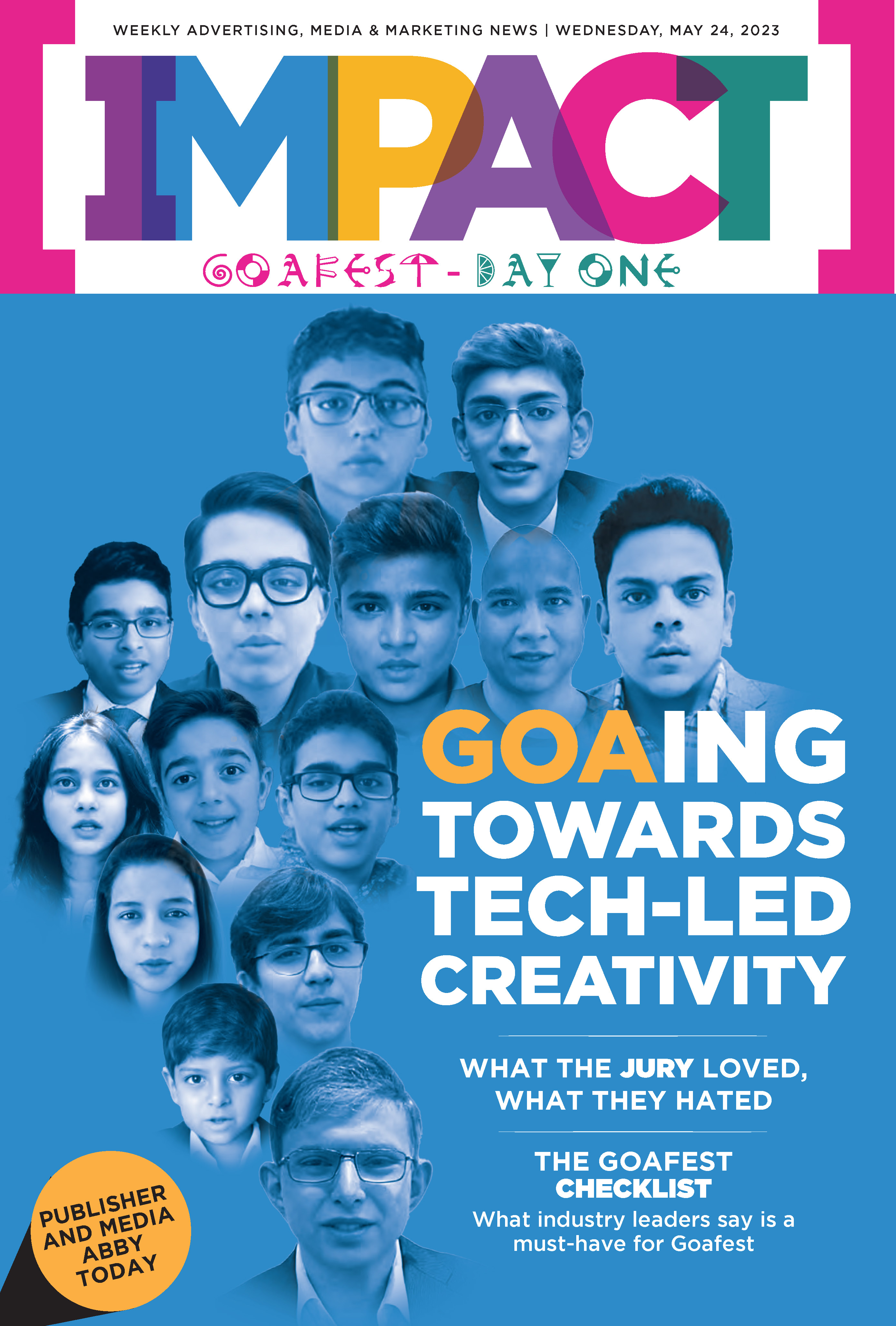
GOAing towards tech-lead creativity
REDISCOVERING ONESELF
50 MOST INFLUENTIAL WOMEN LIST 2022
BACK WITH A BANG!
Your Best Coffee Ever
PR Commune Magazine June-July 2022
13th-ANNIVERSARY-SPECIAL
PR Commune Magazine April 2022
VIDEO GALLERY VIEW MORE
