

“Yeh jo des hai tera, swades hai tera...”
There are some songs that do more than play in the background. They bring back a feeling. A place, a memory, a certain idea of home. And perhaps that is what India itself has always been: deeply familiar, yet constantly changing.
As India marks 80 years of Independence, we wanted to pause and look at that change through a slightly different lens. Not just at how the country has grown, but at how the idea of India has grown with it. What does being Indian mean today? How do Indians see themselves? And what does the world see when it looks at India?
For this Independence Day special, we asked people from the world of advertising, marketing and communications to explore one big question: What does Brand India stand for today? The question is interesting because Brand India is not something that can be summed up in a campaign or a tagline. It is built through what we make, what we consume, what we celebrate, what we aspire to and how confidently we carry our identity into the world.
The India of 2026 is younger, more connected and far more ambitious. It is an India where a street vendor and a startup founder can use the same digital payment infrastructure. Where Indian businesses are building for global audiences, Indian talent is leading some of the world’s biggest companies, and Indian films, music, food, fashion and culture are finding audiences far beyond the country.
But there is another interesting part to this story. Indians are becoming more comfortable being Indian on their own terms. That is where these essays begin.
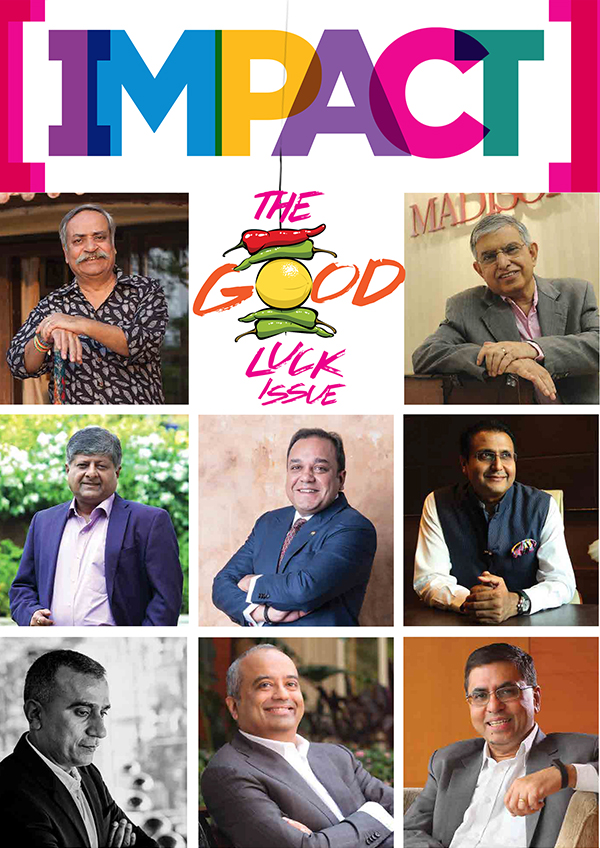
Dr Sandeep Goyal, Chairman of Rediffusion, writes about a Brand New India that is resurgent, young and self-confident. His India does not feel the need to constantly explain itself. It can be deeply rooted in tradition and completely at home with technology. It can take its culture to the world without adding a footnote.
Ganapathy Viswanathan, Communication Consultant and author, looks at the rise of the confident Indian consumer. More informed, more connected and surrounded by more choices, today’s consumer is willing to question brands, compare them and walk away. His essay asks what this means for marketers in a country where the consumer is becoming increasingly clear about what they want.
Shripad Kulkarni, Communications Consultant, looks at Brand India as a house of brands, shaped by the economy, people, culture and tourism. His perspective brings some of India’s contradictions into the conversation too. We have enormous talent, energy and ambition, but also complexity and friction. India can look incredibly productive and incredibly messy at the same time. Perhaps that tension is part of what makes the country distinctive.
Advertising veteran Prabhakar Mundkur takes us through another important part of the story: confidence. His essay reflects on the India of scarcity that earlier generations knew and the India of opportunity that exists today. But his question goes beyond progress. What should we do with this confidence? Can we pair our ambition with accountability, our diversity with greater cohesion and our economic aspirations with a better quality of life?
Marketing leader Kedar Ravangave looks ahead in ‘When India Stopped Catching Up’. His essay explores changing consumer aspirations, AI and the mindset of a younger generation that is beginning to see India differently. The question is becoming less about whether India can match what already exists and more about whether it can help create what comes next.
Read together, these perspectives tell us something important. There is no single Brand India. There is the India of entrepreneurs and engineers, the India of consumers discovering new brands, the India of creators taking Indian languages and stories to global audiences, and the India of tradition, technology, ambition and contradictions, often existing side by side.
And perhaps that is why this conversation feels right for Independence Day. Because independence is not only about where we started. It is also about having the confidence to decide where we want to go. The India we see today is still figuring things out. It is ambitious, proud, sometimes chaotic and often contradictory.
But there is a growing comfort in being all these things at once. We can be global without becoming copies of the world around us. We can embrace technology without leaving tradition behind. We can aspire to do more without forgetting where we came from. So, as that familiar song reminds us, a country can be both, a place and a feeling. And Brand India today is perhaps the sum of those feelings, experiences, aspirations and contradictions.
For our Independence Day special, we bring you five perspectives on that India: where it has come from, how it is changing and what it could mean for the world that is watching. Because the most interesting thing about Brand India is that the story is far from finished.
Here’s to the India we inherited, the India we are building, and the India we are yet to imagine.
Belated Happy Independence Day!
 Brand New India: Resurgent, Young, And Done Asking For Permission
From population and poverty to scale and solutions, Dr Sandeep Goyal, Chairman, Rediffusion writes on the rise of a more self-confident India
On August 15, 1947, we won freedom with a flag and a promise. On August 15, 2026, we are living that promise with a passport, a UPI QR code, and a start-up deck. That is the story of a Brand-New India. Not the India that waits. The India that builds.
Resurgent: From scarcity to scale
For decades, ‘India’ in the global imagination meant two things: population and poverty. Today it means something else: scale and solutions. We are the country that gave the world CoWIN and vaccinated 2.2 billion doses without asking anyone for tech. We are the country where a chai seller in Nagpur and a coder in Bengaluru pay on the same UPI network, 500 million times a day. We are the country that landed on the south pole of the moon and then told ISRO engineers to keep the budget under a movie’s VFX cost. Resurgence is not about shouting louder. It is about delivering when no one is watching. A new highway in 10 days. A semiconductor plant in Gujarat. A diabetes drug made in Hyderabad and sold in Berlin. We stopped apologizing for being a ‘developing nation’ a while ago. We started behaving like a nation that develops others.
Self-confident: We speak, we don’t translate
The old India explained itself. The new India states itself. Listen to a 24-year-old founder in Pune pitch to a VC in San Francisco. No accent coaching. No ‘India is a big market’ slide. Just: “Here’s the product. Here’s the data. Here’s why it works.” Listen to an Indian film that doesn’t need to explain what a ‘jugaad’ is. The world Googles it now. Listen to our athletes, our designers, our chefs. They are not asking “Will the West like this?” They are asking. “Will this be true to us?” That is self-confidence. Not arrogance. The quiet belief that our story does not need a footnote.
Modern: Tradition with Wi-Fi
Brand New India is not a choice between temple and tech. It is both, in the same sentence. It is a grandmother in Patna doing a video pooja on WhatsApp while her grandson files ITR from his phone. It is classical dancers doing Instagram Lives and getting paid in crypto. It is khadi that comes with a QR code for traceability. Modernity here is not copying the West. It is upgrading the Indian operating system. Keep the values. Change the interface. We are building smart cities but still arguing about the right way to make sambar. We are launching 5G and still doing shaadi.com profiles with ‘height, caste, and horoscope’. That tension is not confusion. That is India 2.0.
Young: 65% under 35, 100% in a hurry
The median age in India is 28. The median age in Japan is 49. In Europe, it is 44.
That number is not a statistic. It is an attitude. Young India does not want a job for life. It wants three careers by 35. It does not want to wait 10 years for a promotion. It wants to start something this weekend. This is the generation that learned coding on YouTube, built brands on Instagram, and raised money on a Zoom call. They are impatient, opinionated, and allergic to “this is how we’ve always done it.” Yes, they are also anxious. About jobs, about climate, about rent. But anxiety and ambition are cousins. And in India today, ambition is winning.
Dynamic and Ambitious: From “good enough” to “world class”
The biggest shift is in the question we ask. Ten years ago, “Can India make this?” Today, “Can India make this better, cheaper, and at scale?” From vaccines to EVs to fintech to animation. From Indian SaaS companies running American payroll to Indian architects designing airports in the Middle East. Ambition used to mean “let’s get to $5 trillion GDP”. Now it means “let’s define the next internet, the next energy grid, the next language model — in Indian languages.” Dynamic means we fail fast and start again faster. A D2C brand dies on Monday, three founders meet on Tuesday, and a new brand launches on Friday. That velocity is our edge.
Proud: Modern without an apology
Brand New India is the first generation that is modern without being apologetic about being Indian. For long, ‘modern’ meant wearing Western clothes, speaking in a certain accent, and hiding our roots to fit in. Today, modern means wearing a handloom sari to a board meeting in Singapore, rapping in Hindi and Punjabi on global charts, and naming a tech product after a Sanskrit word without explaining it.
We are proud of our chaos and our systems. Proud that we do Diwali office parties and ship code the next morning. Proud that we argue loudly at the dinner table and still show up for each other. This pride is not loud nationalism. It is quiet confidence. It is the belief that we do not have to become like anyone else to be respected. The world can meet us where we are — in our languages, our food, our festivals, and our ambition.
That is Proud India. Modern on our own terms.
The brand line
So, what is Brand New India?
It is not a slogan. It is a behaviour. A confident behaviour.
It is the delivery partner who codes at night.
It is the teacher in a village school running a YouTube channel.
It is the farmer using satellite data and still touching the soil before sowing.
It is the woman who says “No jhukna for me. I am me” in a boardroom and at home.
That is the new India. My India.
Jai Hind!
 Brand India: The Productivity Paradox
Shripad Kulkarni, communications consultant, discusses the talent, ambition and scale that India represents, and asks whether these strengths can come together to create a truly global brand
Let’s first look at the simpler one: Indian global brands. As per Kantar study, TCS is globally very strong, in B2B and technology services. Infosys follows. In consumer space, Tata — the broadest global recognition, helped by the group structure and multiple sector presence comes close. But no big global brand. Not yet. We still face a recognition and, maybe, trust gap – especially in western countries. So, for some time now, India is an integral part of Cannes, but no truly global brand. This does kind of set the ground realities.
Now about Brand India.
India is not one brand. Not a branded house but a house of brands. 4 brands.
Economy, People, Culture and Tourism. Some of them strengthen each other. Some of them clash. All of them shape how the world sees us.
A brand is what the audience thinks about it. Not the other way around. So, let’s say we look at how US sees brand India - the US is one of India’s most important external reference markets, not just because of trade and geopolitics, but because it also has a visible and influential Indian diaspora that shapes how India is understood in business, culture and public life. And we have enough surveys, reports that give an indication apart from our own near ones settled in US. First the Economy Brand.
Economy Brand
There has been a marked shift in India’s economy. High speed, multi level economic initiatives and new engagement with the world in the last decade has transformed India to the next orbit.
This is the India of movement. Factories, startups, digital systems, infrastructure, consumption, ambition. The global media story is clear: India is seen as one of the fastest-growing major economies, with scale that is impossible to ignore. Covid Vaccine, ISRO, Indians in Spell Bee, rise in GCC’s - all fuel this. But that same story also carries a warning. Growth is visible, so are pressures around investment, fiscal strain, tariffs, currency weakness and uneven coordination.
That is why I call it a productivity paradox.
India is productive, but not always efficient. It creates energy, output, talent and momentum at scale. But it also creates friction at scale. The economy looks busy, alive and full of intent. Yet from the outside, it can also look uneven, overloaded and hard to read. India is not seen as stagnant. It is seen as moving fast but not always moving cleanly. Next the People Brand.
People Brand
For the US, Indian people are one of the strongest positive signals of Brand India. The Indian-origin executive, engineer, founder, doctor, researcher and student have become familiar markers of credibility. But that is only one side of the story. The other side is pressure: a huge youth population, education gaps, job anxiety, and rising frustration among young Indians whose aspiration is moving faster than institutions. So, the people brand is not just talent. It is talent under pressure. India has a human surplus in the best sense. It has capability, ambition and hunger. But it also has expectation at a scale that very few systems can absorb smoothly. That is why India can look both powerful and strained at the same time.
Culture Brand
This is where India becomes most visible and most misunderstood. For American media, India often appears through spectacle, spirituality, colour, ritual and emotion — Holi, Maha Kumbh, devotional culture, festivals, food, cinema and public intensity. But India’s culture today is not static. It is hybrid. It is ancient and modern at the same time. Tradition is not being preserved in a museum. It is being remixed in real time.
This creates another paradox.
Cultural depth gives India enormous distinction. But to an outsider, that same depth can look like disorder. India feels layered, expressive and alive. It can also feel noisy, excessive and hard to decode. That is not a branding failure. That is the nature of the culture itself.
The Tourism Brand
India is one of the richest tourism propositions in the world. Few countries can offer this kind of range - faith, food, history, wellness, nature, craft, design and living civilisation all in one place. But the tourism story also carries risk. Recent coverage has shown how quickly safety concerns, infrastructure failures or security incidents can shape global perception, especially in places like Kashmir. Tourism in India is not a frictionless promise. It is a high-reward experience.
In totality, we should not pretend India is simple, seamless or easy. It is not. But it is productive in a much deeper way. It produces growth, culture, talent, memory, movement and meaning at a scale very few countries can match. We produce more than we organize. More talent than we can fully absorb. More culture than one narrative can contain. More tourism value than our systems consistently deliver. More momentum than coherence. But maybe that is exactly what Brand India is.
Not a single promise. Not a tidy slogan. But a house of brands built on one central truth: India is a country whose productive power is always greater than its visible order. And, maybe, that is how the world increasingly sees us — not as a finished brand, but as a country generating possibility faster than it can package it.
 The Rise of the Confident Indian Consumer
Ganapathy Viswanathan, communication consultant and author, shares his thoughts on how brand India is entering a new era— from culture and heritage to technology and innovation
As India celebrates 80 years of Independence, perhaps the most interesting story is not just how the country has changed, but how its people have changed with it. From a nation that was finding its feet after Independence to an economy that today speaks confidently to the world, India has travelled an extraordinary distance.
The India of 2026 is a very different India from the India of 1947. It is younger, more connected, more ambitious and far more comfortable with the world. Technology has collapsed geographical boundaries, aspirations have expanded and access to information has fundamentally changed the way Indians think, behave and make choices.
This is the New India. And along with New India, there is also a new Brand India.
Brand India is no longer defined only by its history, culture and heritage. It is increasingly being defined by its technology, entrepreneurship, innovation, startups, digital capabilities, creative talent and its ability to compete with the best in the world.
India is no longer simply a market that global brands want to enter. It is also a market producing brands that can travel beyond India.
The Consumer Has Changed with the Country
Perhaps nowhere is this transformation more visible than in the Indian consumer. For decades, the Indian consumer lived in an environment where choice was limited. Availability often determined what people bought. Brands had a powerful role in educating consumers, creating aspiration and telling them what represented quality
and value.
That relationship has changed dramatically. The Indian consumer today has access to more brands, more information and more opinions than ever before. A smartphone can put hundreds of choices in front of a consumer within seconds. Reviews, social media conversations, influencers, comparison platforms and e-commerce have made the consumer far more informed.
The consumer no longer has to simply believe what a brand says. They can check, compare, question and switch. That is a fundamental change in the balance of power between brands and consumers.
Freedom Has Created Choice
Independence has created a consumer who wants freedom not just from scarcity, but from being told what to buy. This may be one of the most significant changes in Indian consumption. Earlier, the question was often: What is available to me? Today, it is increasingly: What do I want? That is a huge psychological shift. The consumer wants to make the decision. They want to decide which phone to buy, which car to drive, which restaurant to visit, which content to watch and which brand deserves their money.
And they are not necessarily looking for the biggest or most familiar brand. They are willing to experiment, discover new brands and move between categories. The idea of loyalty has therefore changed too. Consumers can be loyal, but loyalty has to be earned repeatedly.
The Young Consumer Is Leading the Change
The emergence of Gen Z makes this transformation even more fascinating.
This is a generation that has grown up with technology as a natural part of life. Global culture is available on the phone. Trends travel across borders almost instantly. A young Indian consumer can discover a global brand, compare it with an Indian alternative, watch reviews and make a purchase without ever speaking to a salesperson. But the important change is not simply that young consumers are digitally savvy. It is that they are confident consumers.
They question traditional authority. They are willing to experiment. They want brands to have a point of view, but they also want brands to listen. The young consumer is therefore not just another demographic segment. In many ways, this consumer is showing us where the Indian consumer of tomorrow is headed.
When the Consumer Gets Ahead of the Brand
For years, marketers spoke about being consumer-centric. Today, that is no longer enough. The consumer may actually be ahead of the brand. Consumers are researching brands almost as intensely as brands research consumers. They look beyond advertising to understand the product, the company, its reputation, its customer experience and what other consumers are saying.
A good campaign may attract attention, but it cannot compensate for a poor product. A strong promise may create expectations, but the experience has to deliver. And a brand can no longer assume that consumers will stay simply because they have stayed in the past. This puts a greater responsibility on brands. The successful brands of New India will be those that understand that consumers do not want to be spoken at. They want to be understood.
Brand India Has a New Consumer
This is where the evolution of Brand India becomes particularly important. India is increasingly presenting itself to the world as a confident, ambitious and capable nation. Its consumers are beginning to reflect that same confidence. They are globally aware without necessarily wanting to become global clones. They are willing to embrace international brands while simultaneously taking pride in Indian brands. They can move seamlessly between tradition and modernity. That is perhaps the most interesting characteristic of the New Indian consumer. They don’t have to choose between being Indian and being global. They can be both. And brands will have to understand this complexity.
The One I Would Choose
The future of Indian marketing may ultimately come down to one simple thought: choice. The consumer has more choices than ever before. The challenge for brands is therefore no longer simply to be visible. It is to become the one consumer would choose. That requires more than advertising. It requires relevance, trust, experience, innovation and consistency.
India’s 80-year journey has taken the consumer from scarcity to choice, from being told to being heard, and from accepting brands to actively evaluating them. That is the story of the confident Indian consumer. And perhaps the most powerful expression of India’s independence today is not simply that the consumer has the freedom to choose. It is that the consumer confidently says, “I know what I want. And I will choose the one I would choose.”
 When India Stopped Catching Up
Marketing leader Kedar Ravangave, who builds AI-native systems that help transform businesses, writes that for most of its independent history, India measured itself against the world. That picture is quietly changing, and the change is showing up in what we buy, what we build, and what the next generation counts as progress
For most of independent India’s history, the ambition was to catch up. Catch up economically. Catch up in consumption. Catch up technologically. Catch up with global standards. Catch up with the world. Something more interesting is happening now. India is beginning to ask a different question: what if we don’t just catch up with the world, but help shape what comes next?
That shift is visible in places that have little to do with GDP charts. Take the Indian consumer. For decades, the defining vocabulary was value, affordability and aspiration. Today, aspiration has acquired a different texture. The question is increasingly not just ‘Can I afford this?’ but ‘Do I want this?’ and ‘Does this represent me?’ India’s Gen Z, for instance, is hardly turning away from consumption; recent research shows 84 per cent expect their spending to rise, while quality ranks well ahead of price as a purchase-driver. The aspiration is alive. What is changing is its expression. Technology is perhaps an even bigger signal. India’s digital story was once about adoption. Then it became about building technology at scale. The next chapter could be about creating entirely new models of how technology works for a country as complex as India.
AI makes this particularly interesting. India’s advantage may not be that Indians will use AI faster than everyone else. It may be that a country of this scale, linguistic diversity, digital penetration and entrepreneurial energy can discover new ways of making AI useful to hundreds of millions of people — and in doing so, create models others can learn from. India’s own AI ambitions are increasingly being framed around building capabilities and solutions for the world, not merely consuming them. And then there is the generation coming of age now. It would be easy to reduce their awakening to climate or sustainability. The deeper shift is in their definition of progress. They are not necessarily asking for less. They want more — more experiences, more freedom, more individuality, more meaning. But they are increasingly asking what that ‘more’ should cost, and what it should leave behind. That matters because Brand India has always been more than what India exports. It is also what India makes the world believe is possible. The convergence of economic confidence, technological possibility and a more questioning generation is creating something different: a country that is increasingly comfortable defining its own terms. Perhaps that is the real New India. Not an India that has arrived. Not an India that has surpassed everyone else. And certainly not an India that has stopped learning from the world. But an India that no longer sees the world only as the benchmark.
The old Brand India was about belonging to the world. The new Brand India is increasingly about having a hand in shaping it. And perhaps that is the most interesting change of all: India is no longer just being watched. It is being watched for what comes next.
 ‘Being Indian Is a Source of Confidence’
Prabhakar Mundkur, advertising veteran and brand-builder, writes that India’s next chapter must be about combining our extraordinary diversity with greater social cohesion, our entrepreneurial energy with greater accountability, and our ambition with a higher standard of living for every Indian
On this Independence Day, we should perhaps pause and ask ourselves a slightly different question: What does India mean as a brand today?
Seventy-nine years ago, India was a country fighting to become independent. It inherited an economy depleted by colonial rule, a largely poor population and a deep dependence on the outside world for many of its basic needs. The India of my childhood was a shortage economy. We stood in queues for telephones, scooters and even cooking gas. Milk was something that had to be carefully planned. Foreign exchange was scarce. Travelling abroad was a privilege. And, somewhere beneath all this, there was a certain diffidence about being Indian.
We have travelled a very long distance since then.
Today, India is one of the world’s largest economies, with a growth trajectory that continues to attract global attention. We are the world’s largest milk producer, producing nearly 248 million tonnes in 2024-25 and accounting for about a quarter of global milk production. But the transformation is much bigger than statistics. Indians have gone from seeking jobs abroad to running some of the world’s most influential corporations. Satya Nadella leads Microsoft. Sundar Pichai leads Google. Indian-origin CEOs, entrepreneurs, scientists, doctors and professionals occupy positions of influence across the globe.
And perhaps most importantly, Indians themselves have changed.
We travel the world in numbers our parents could scarcely have imagined. We study at its best universities, build companies in its technology centres, buy properties in its great cities and participate confidently in global conversations. India is no longer merely a market the world wants to sell to. It is a market, a talent pool and increasingly, a source of ideas that the world wants to engage with. That is a profound change in Brand India. For decades, our national image carried an element of apology. We were conscious of our poverty, our bureaucracy, our infrastructure and our contradictions. We often measured ourselves against the West and found ourselves wanting. Today, the gaze is different.
Being Indian is no longer something that needs an explanation. It is increasingly a source of confidence. But a strong brand is not built merely on size or wealth. It is built on what the world comes to expect of you.
And this is where the next chapter of Brand India becomes interesting. Can we become known not only for scale, but for quality? Not only for our software engineers, but for our products? Not only for our diaspora, but for institutions that work? Can we combine our extraordinary diversity with greater social cohesion, our entrepreneurial energy with greater accountability, and our ambition with a higher standard of living for every Indian?
The first 79 years were, in many ways, about proving that India could survive and then prosper.
The next 25 should be about demonstrating what India can contribute to the world. Perhaps that is the real evolution of Brand India: from a country that wanted to be respected to a country that has earned respect—and now has the opportunity to define what that respect stands for.
That is something worth celebrating this Independence Day.